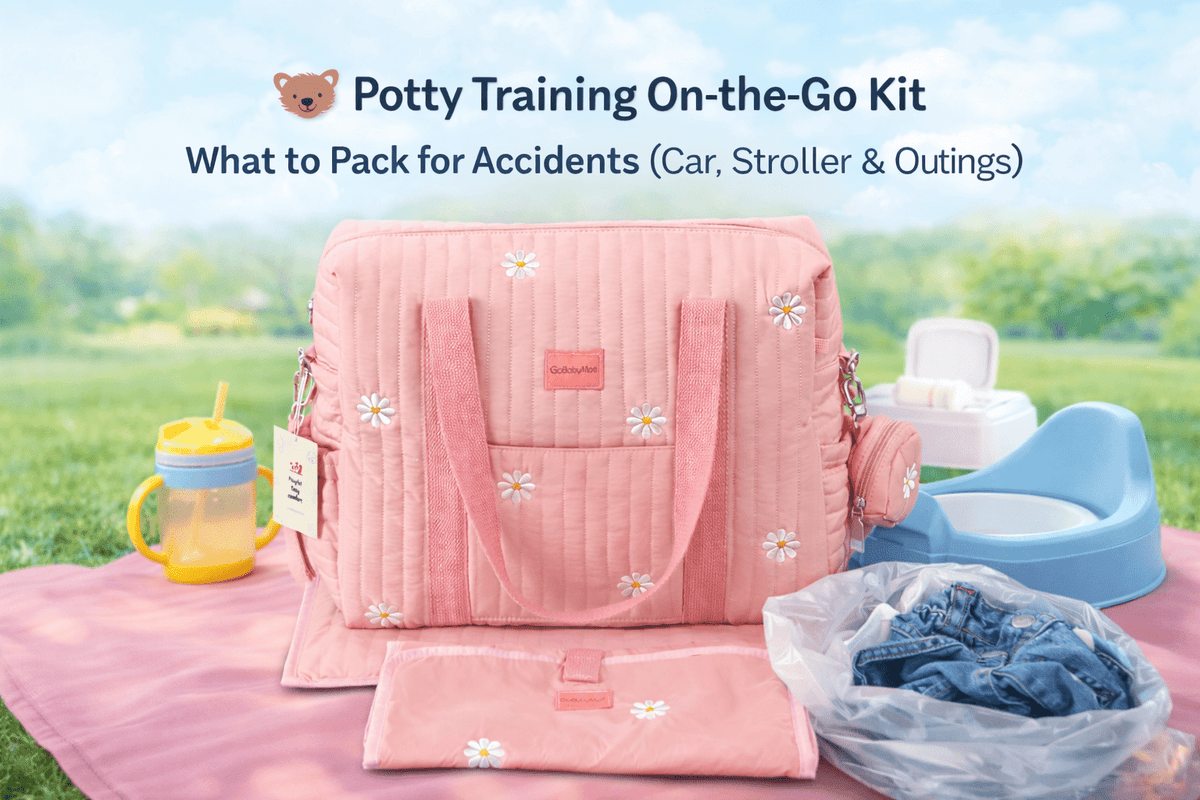
A parent-tested, practical packing system to handle potty training accidents without stress.
Written by GoBabyMart Team
Last updated: March 2025
What to Pack for Potty Training Accidents: A Quick 1-Minute Checklist
Potty training doesn’t fail because your child had an accident. It feels like it’s failing when you’re stuck without the right backup plan.
If you want one simple goal: pack so you can clean up quickly, stay calm, and move on without turning a small accident into a big moment.
Most potty training guides focus on what to pack — but where you keep those items and how quickly you can reach them matters just as much during an accident.
The core potty-training go bag essentials (works for most outings)
-
3–5 pairs of underwear (yes, more than you think)
-
2 bottoms (leggings/shorts) + 1 top
-
1 full “complete reset” outfit (top + bottom + underwear + socks)
-
Wipes (for hands + quick cleanup)
-
Disposable bags (for wet/soiled clothing)
-
Small towel or absorbent cloth
-
Hand sanitizer (for when a sink isn’t available)
-
Optional: training pants/pull-ups (context-dependent—explained below)
When soap and running water aren’t available, an alcohol-based hand sanitizer with at least 60% alcohol is effective for quick hand hygiene; however, washing hands with soap and water is the preferred method when possible. According to CDC guidance, teach and model proper handwashing to help prevent germ spread during potty training and mess cleanup.
This list is the baseline. The difference between “prepared” and “still stressed” is how you split it between your car, stroller, and main bag.

How This Potty Training Go-Bag System Works (And Why It’s Easier Than “Packing More”)
Here’s the parent problem: when you try to carry everything for potty training, you either (1) overpack and can’t find anything, or (2) underpack and get caught on the one day you needed backups.
The 3-Zone System (Original Framework)
Zone 1: Car Kit (lives in the car)
This is for the messiest scenarios: accidents in a car seat, traffic, or “we can’t find a bathroom.”
Zone 2: Stroller + Outings Mini Kit (grab-and-go)
This is what you need within reach on walks, playground trips, and quick errands.
Zone 3: Parent Backup (one thing for you)
Because the most frustrating accidents are the ones that also get on you.
This structure is what many generic packing lists miss—most are “one bag, one list,” even though real life isn’t one setting. For a broader look at organizing baby essentials efficiently, see our guide on how to organize a diaper bag for daily outings.
What Should Be in a Potty Training Go Bag?
A potty training go bag should include (1) a clothing reset, (2) cleanup tools, and (3) a way to contain mess—fast. That’s the formula.
Clothing: pack for a “full reset,” not just a spare
Accidents rarely stop at underwear. A realistic reset includes:
-
Underwear
-
Bottoms
-
Socks (often forgotten, often needed)
-
Optional second set of bottoms if your child is early in training
How many should you pack?
For typical outings, most parents do best with 3–5 underwear and 2 bottoms because accidents can cluster (one small leak, then a bigger one 20 minutes later). That “more than you think” pattern shows up repeatedly in on-the-go guides.
Cleanup: separate “child cleanup” from “surface cleanup”
You want two categories:
-
Body cleanup: wipes + a small towel
-
Surface cleanup: a few disinfecting wipes or a spare absorbent cloth for benches, stroller seats, etc.
Containment: the item that protects your sanity
Containment prevents the “where do I put this?” panic.
-
2–3 disposable bags (or a washable wet bag)
-
One extra zip bag for small items (wet underwear, socks)
Potty Training Go Bag Scenarios: What to Pack for Each Situation
Not every outing requires the same setup. Below is a simple scenario-based guide to help you pack the right potty training supplies based on where you’re going — without overpacking or scrambling.
Quick Errands (15–30 Minutes)
-
1 bottom
-
1–2 pairs of underwear
-
Wipes
-
1 disposable or wet bag
Why: Short trips still need a backup, but overpacking slows you down.
Where it goes: A slim grab-and-go pouch near the top of your bag.
Stroller Walks or Park Visits
-
1 bottom
-
2 pairs of underwear
-
Wipes
-
1 disposable bag
-
Small reward item (optional)
Why: Bathrooms may not be nearby, and timing matters.
Where it goes: A front pocket, clipped pouch, or stroller organizer.
Short Car Rides
-
Full outfit reset (top, bottom, underwear, socks)
-
Wipes
-
Disposable bags
Why: Accidents often happen mid-drive or right after arrival.
Where it goes: A dedicated potty-training car kit.
Long Car Rides or Road Trips
-
Full outfit reset
-
Wipes
-
Disposable bags
-
Travel potty or seat insert (if needed)
Why: Longer drives increase the chance of urgency without access to restrooms.
Where it goes: A trunk bin or under-seat kit.
Restaurants or Public Places
-
Extra underwear
-
Wipes
-
Disposable bag
Why: Bathrooms are available, but speed and discretion matter.
Where it goes: An easy-to-reach pouch you can grab quickly.
Day Trips (2–4 Hours)
-
Full outfit reset
-
Wipes
-
Disposable bags
Why: Enough time for multiple attempts — and demonstrated flexibility.
Where it goes: Your main bag, with a backup kit in the car if possible.
Travel Days or Long Outings
-
Two full outfit resets
-
Wipes
-
Disposable bags
-
Optional training pants for extended transitions
Why: Long days benefit from redundancy and flexibility. This strategy pairs well with our travel packing tips for outings with kids, especially when planning longer days away from home.
Where it goes: Your main bag, plus a secondary pouch for quick access.
This scenario-based approach helps you stay prepared without carrying everything at all times — reducing stress while keeping potty training consistent outside the house.
What Do I Keep in the Car for Potty Training Accidents?
Keep a dedicated potty training car kit so you’re not rebuilding your supplies before every drive.
Car Kit Packing List (the “don’t get stranded” setup)
-
Travel potty or seat insert
-
Potty liners or disposable bags
-
Wipes or paper towels (or a small towel)
-
Full outfit reset (including socks)
-
Extra plastic bags for soiled clothes
-
Optional: training pants or pull-ups for longer drives
Safety-focused travel resources often recommend a car-specific kit approach — not just for underwear changes, but for wet seats, clothing, and unexpected stops.
Important car seat safety note (worth reading once)
Car seat safety after an accident: If an accident occurs while your child is buckled in a car seat, follow the specific cleaning and maintenance instructions from your car seat manufacturer. Improper use of unapproved liners or accessories can interfere with the restraint system and compromise safety; consult your car seat’s manual or manufacturer support for accurate cleaning procedures.
Where to store it
-
A small bin in the trunk or under-seat area
-
One labeled pouch you can grab with one hand
If you already carry a structured everyday bag, using consistent “zones” inside it matters. Many parents find that bags with stable compartments make it easier to keep potty supplies from turning into a pile—similar to the pocket-purpose approach used in organization guides.
What Should I Bring for Potty Training on Stroller Walks and Outings?

For stroller walks, you want the minimum effective kit—because you’re often managing a child, a stroller, and timing.
Stroller Mini Kit (grab-and-go pouch)
Pack this in a slim pouch you can move between bags:
-
2 underwear
-
1 bottom
-
1 disposable bag (minimum)
-
Wipes
-
Small snack or reward item (optional, but helpful for consistency)
Separating a slim “mini pouch” for quick outings from a more complete kit for longer trips helps parents stay prepared without overpacking. Having a small, dedicated set of essentials within reach allows you to handle accidents quickly and calmly when bathrooms aren’t immediately available.
Where it goes (so you can actually reach it)
-
Top pocket
-
Front compartment
-
Or clipped inside with a small pouch strap
If you prefer a tote setup for fast access on short outings, a structured tote like the GoBabyMart Multifunctional Diaper Bag Tote can make it easier to grab the pouch quickly without digging.
If you’re hands-free most of the day (stroller + toddler), a convertible diaper backpack can reduce the “everything sliding to the bottom”.
Do I Pack Pull-Ups When Potty Training Outside the House?
Yes—in specific situations, not as your default.
If you’re in the early phase, or you’re doing a long drive, airport day, or a place with limited bathrooms, packing (or temporarily using) training pants can reduce stress and keep the experience positive. Many travel-focused potty training lists include this as a “backup for hard settings,” not a daily requirement.
A practical middle ground:
-
Keep one pair in the car kit
-
Keep one in the main bag
-
Don’t let it replace your routine bathroom prompts
The 60-Second Accident Reset (What to Do in Public Without Making It a “Thing”)
If your toddler has an accident in public, the best move is simple: calm → contain → change → clean hands → continue.
Step 1: Calm (10 seconds)
Use a neutral script:
-
“Accidents happen. We’ll get you comfortable.”
Step 2: Contain (10 seconds)
-
Bag the wet items immediately
-
Move the cleanup pouch to the top (don’t rummage)
Step 3: Change (25 seconds)
-
Underwear + bottoms
-
Socks if needed
-
If you’re short on space, prioritize dryness and comfort over “perfect outfit”
Step 4: Clean hands (15 seconds)
Washing hands with soap and clean running water is the most effective way to remove germs after bathroom use or cleanup. When that isn’t possible during an outing, using hand wipes or an alcohol-based hand sanitizer helps reduce germ transfer until you reach a sink.
This is the difference between “we’re leaving” and “we can keep going.”
Grab Level Decision Guide (So You Don’t Overpack)
Quick Errand (30–60 minutes)
-
Stroller mini kit
-
1 extra bottom
-
2–3 underwear total
Standard Outing (2–4 hours)
-
Stroller mini kit
-
Add: full reset outfit + extra bag + small towel
Long Drive / No-bathroom certainty
-
Standard potty training outing setup
-
Add: travel potty or disposable potty liners
-
Add: extra paper towels or disposable wipes
-
Optional: one backup training pant for emergencies
Tip: On long travel days, treat your potty training go bag like a travel kit — the key difference is swapping diapers for accident-readiness essentials.
Potty training go bag for ages 18–24 months (early starters)
If your child is on the younger end, accidents can be more frequent because they are still learning to recognize and communicate body signals. The American Academy of Pediatrics explains that while some children show early physical signs of readiness around 18 months, cognitive and emotional readiness often develops later — especially outside familiar environments. This means outings commonly involve more misses than at home, and your go bag should be packed with extra margin rather than optimism.
Pack: 5 underwear, 2 bottoms, and a full reset outfit (top, bottom, socks) every time.
Source: American Academy of Pediatrics via HealthyChildren.org
Potty training go bag for ages 2–3 years (typical training window)
This is the most common age range for active potty training, and where many families see strong progress at home but more accidents during outings. Distractions, unfamiliar bathrooms, and delayed access to a toilet can all interrupt a child’s routine, which is why separating a stroller mini kit for quick changes and a car kit for longer trips works well at this stage.
Pack: 3 underwear, 2 bottoms, wipes, disposal bags, and hand hygiene essentials.
Automatic toilets + scared toddlers (the “public restroom refusal” problem)
Answer first: Bring 3–5 sticky notes in your mini kit.
Automatic flush sensors can startle young children and cause bathroom refusal mid-outing. Placing sticky notes over the sensor temporarily prevents unexpected flushing and gives your child time to relax and focus. This is a simple, widely used parent workaround that can prevent rushed accidents and power struggles in public restrooms.
Frequently Asked Questions (FAQ)
1) What should be in a potty training go bag?
A potty training go bag should cover three essentials: (1) extra underwear and a full clothing reset, (2) wipes and a small towel for quick cleanup, and (3) disposable or wet bags to contain messes. This setup allows you to handle accidents quickly without overpacking or scrambling.
2) What do I keep in the car for potty training accidents?
A potty training car kit should be more complete than a stroller kit. Pack a full outfit reset (including socks), wipes or paper towels, disposable bags, and—if bathroom access is uncertain—a travel potty or seat insert. Keeping this kit in your car prevents getting stranded mid-drive.
3) How many extra clothes should I pack?
For short outings, one full outfit reset is usually enough. For longer days or early potty training, pack two full outfit resets, since accidents often happen in clusters rather than evenly spaced.
4) How do you clean a car seat after a potty accident?
Always follow your car seat manufacturer’s cleaning instructions. Avoid unapproved liners, soaking methods, or harsh cleaners, as these can interfere with the seat’s safety performance. When unsure, consult the car seat manual or manufacturer support before cleaning.
5) Do I pack pull-ups when potty training outside the house?
Pull-ups can be helpful for long drives, travel days, or places with limited bathroom access. For short outings, many parents prefer to use regular underwear to keep potty training consistent. A common compromise is carrying one pull-up as backup without making it the default.
6) What if my child refuses to use public bathrooms?
Public bathroom refusal is common during potty training due to loud flushing, unfamiliar spaces, or automatic toilets. Preparing your child ahead of time, explaining what to expect, and keeping early outings short can help build confidence over time.
Final Takeaway
A good potty training go bag is not “more stuff.” It’s the right items in the right places—a car kit that lives in your vehicle, a small stroller/outings pouch you can grab instantly, and a simple reset routine that keeps accidents from turning into a day-ending event.
If you want the result every parent is actually chasing: prepared enough to leave the house, light enough to manage, and calm enough to keep potty training positive.
Editorial Responsibility & Sources
We create and review our packing guides using real parent experience, current childcare norms, and evidence-based pediatric and hygiene guidance. We prioritize practical steps families can repeat and maintain. Sources referenced for this article include the Centers for Disease Control and Prevention (CDC) and the American Academy of Pediatrics (AAP).


