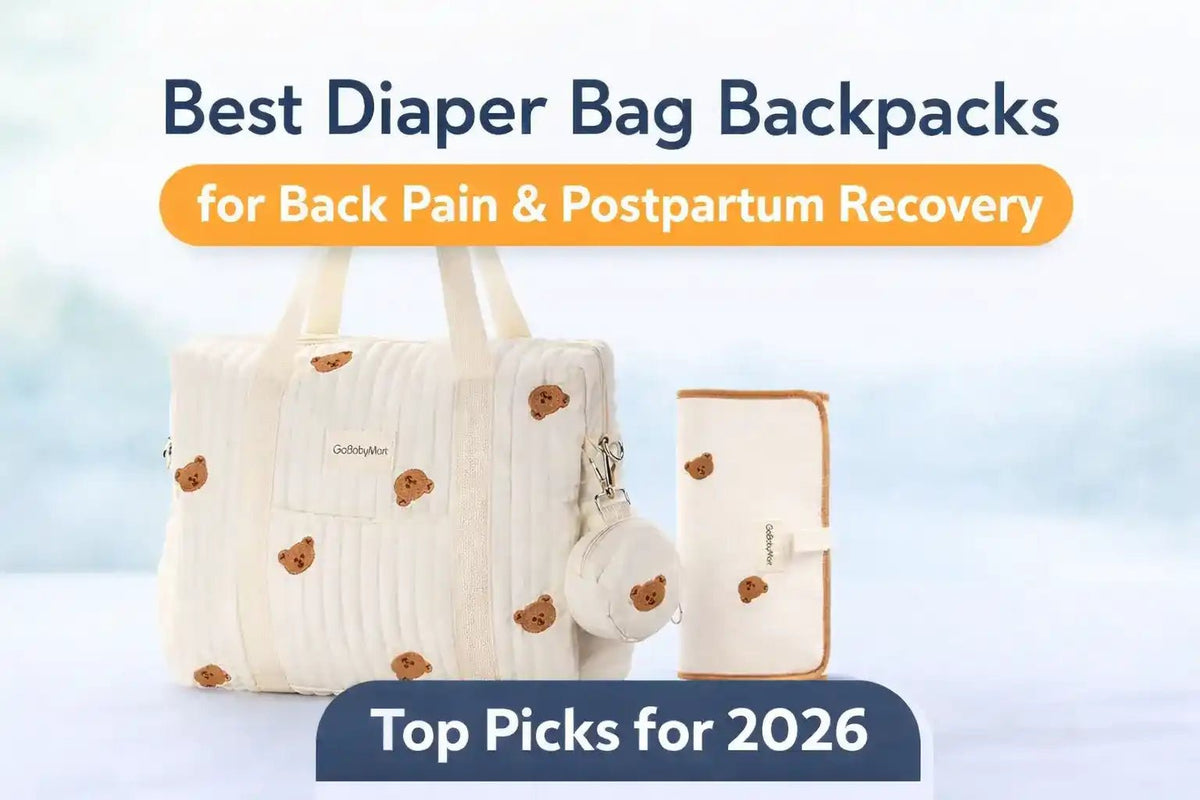
Best Diaper Bag Backpacks for Back Pain, Postpartum & C-Section Recovery
Author Box
Written by: GoBabyMart Editorial Team
Last updated: December 17, 2025
Bringing a baby into the world is physical—full stop. Even if your delivery was uncomplicated, the early postpartum weeks can come with core weakness, shoulder tightness from feeding positions, and back fatigue that shows up faster than it used to. Then you add the reality: baby + car seat + stroller + diaper bag… and suddenly your bag choice matters.
Most diaper bag posts focus on pockets and style. Helpful, sure. But if you’re searching for back health and postpartum recovery, you’re really asking:
“Which diaper bag backpack will reduce strain in real life—when I’m tired, healing, and moving fast?”
This guide answers that directly.

Best Picks Summary (Fast Answers + Who Each Is For)
1) Best diaper bag backpack for back pain (everyday, hands-free carry)
Best for: parents who feel back/shoulder fatigue quickly and need stable, even weight distribution.
Why it helps: backpack carry (both straps) spreads load across both shoulders and keeps your hands free.
Fast answer: Choose a structured backpack that rides high, doesn’t swing, and keeps essentials easy to reach.
Recommended option: The GoBabyMart Convertible Diaper Backpack (linked below).
2) Best diaper bag after C-section (minimal twisting + easy access)
Best for: parents recovering from a C-section who want fewer awkward movements and less rummaging.
Why it helps: a structured opening + organized zones reduces bending, twisting, and digging.
Fast answer: Prioritize easy access and a setup you can stroller-mount on longer walks.
Recommended option: The GoBabyMart Convertible Diaper Backpack (linked below).
3) Best for short trips (quick access, car-based errands, lighter carry)
Best for: quick store runs, doctor visits, or days when wearing a backpack feels like “too much.”
Why it helps: a tote can be easier for short bursts—if you keep it light and carry it intentionally.
Fast answer: For short, car-based outings, a lightweight tote is fine. For longer walks, use a backpack.
Recommended option: The GoBabyMart Multifunctional Diaper Bag Tote (linked below).
Product Recommendations (Early Payoff — No Scrolling Required)

If you want the quick “what should I choose?” answer:
-
Best backpack pick for back health + postpartum: GoBabyMart Convertible Diaper Backpack
Built for hands-free carry with an organized interior—helpful when your tolerance for digging and twisting is low. -
Best alternative for short trips: GoBabyMart Multifunctional Diaper Bag Tote
Works well for quick access routines when you’re not carrying it for long walks. -
Want to compare styles and sizes quickly? Browse the full GoBabyMart diaper bags collection.
Now let’s make sure you choose (and use) a bag in a way that actually protects your back.
Best diaper bag backpack for back pain (what actually matters)
The biggest misconception is thinking “padded straps” automatically equals back-friendly. Comfort matters, but back health is mostly about weight distribution, bag ride height, and how often you twist/reach while using it.
Here’s what actually moves the needle.
Strap design that distributes load (not just padding)
Look for:
-
Wide, flat straps that don’t dig into your neck
-
Easy adjustability so the bag rides higher (mid-to-upper back, not slumped low)
-
Stable carry (a floppy bag makes your body compensate)
A simple truth: if you constantly grab one strap and go, even the best backpack becomes a shoulder bag in disguise.
A back panel that supports stable carry
The back panel won’t “fix” posture, but it can reduce shifting and pressure points. The real win is where the weight sits:
-
Heavy items closest to your back
-
Lighter items farther out
That one change reduces leverage on your spine.
Easy access that prevents twisting and rummaging
Twisting + reaching is a common back trigger, especially when you’re also holding a baby. A structured opening and organized layout helps you avoid that “digging at the bottom” habit.
AAOS specifically emphasizes lifting mechanics for new parents: keep loads close, lift with your legs, and avoid twisting—principles that apply to baby gear and how you handle your bag daily.
Best diaper bag after C-section (what to prioritize for recovery)
Fast answer: The best diaper bag after a C-section is one that minimizes twisting, deep bending, and frantic digging—because those movements add friction to your day.
Prioritize:
-
Structured opening so you can see what you need quickly
-
Clear “zones” (diapers/wipes, feeding, extras) so you’re not rummaging
-
A setup that can be stroller-mounted on longer walks so you’re not carrying weight the whole time
Cleveland Clinic notes postpartum is a real recovery period—so choosing gear that reduces daily strain is practical support, not a luxury.
Are diaper bag backpacks better for your back than totes?
Usually, yes—if you wear both straps and the backpack rides high and close. Backpacks distribute weight across both shoulders, while totes often load one side and pull your body into a subtle lean.
The exception: if a backpack forces awkward reaching or you carry it one-strap most of the time, it can be worse than a tote you carry briefly and intentionally.
If you want a clear “which one should I use?” decision guide, read this.
How should a diaper bag backpack fit on your back?
It should sit high and close—mid to upper back—with straps snug enough that the bag doesn’t bounce. If it hangs low, it increases leverage on your lower back and encourages forward-lean compensation.
A quick fit check you can do in your bedroom:
-
Put a realistic load in the bag (diapers + wipes + one bottle).
-
Tighten straps until the bag sits mid-to-upper back.
-
Walk 20 steps. If the bag swings or bounces, it will wear you down over time.
How much should a diaper bag weigh for postpartum back health?
As light as you can realistically keep it for your routine. Postpartum, the goal isn’t carrying everything for every scenario—it’s being prepared for your next 2–3 hours without unnecessary duplicates.
A helpful self-check:
-
If your shoulders or lower back feel noticeably worse after 10–15 minutes of walking, remove “just in case” extras first (extra outfits, extra toys, duplicate containers).
The Back-First Fit & Pack System (original framework you can actually use)
Most parents shop by brand. For back health, shop by fit + routine + packing strategy.
Step 1: Match the bag to your hardest 20 minutes (not your easiest day)
Ask:
-
Are you doing stairs daily?
-
Carrying a car seat often?
-
Babywearing sometimes?
-
Managing twins?
-
Recovering from a C-section?
Your “hardest 20 minutes” matters more than your best day.
Step 2: Use the 3-zone packing rule (simple, but it works)
This is the fastest way to make any backpack more ergonomic:
Zone A (Against your back): heaviest items
Diapers, wipes, full water bottle, formula
Zone B (Middle): medium + frequently used
Spare outfit, burp cloths, changing pad
Zone C (Outer/front pockets): light + quick-grab
Pacifier, keys, hand sanitizer, snack pouch
Common mistake that causes back strain: putting a full bottle or water bottle in a far outer pocket. Move it closer to your back and the bag immediately feels lighter.
If you want a deeper organization approach (especially helpful for reducing digging/twisting), this guide is a good companion.
Step 3: Fit test + access test (30 seconds)
With the bag on:
-
Can you reach wipes without digging?
-
Can you find a spare diaper without pulling everything out?
-
Does the bag stay stable when you walk?
If it fails at home, it won’t feel better outside.
Quick checklist: Back-health-friendly diaper bag backpack (copy-friendly)
Use this while shopping or to set up the bag you already own.
Fit & carry
-
Straps are wide and sit flat (no neck digging)
-
Bag rides high and close (doesn’t bounce when walking)
-
You can put it on/take it off without twisting or shrugging hard
-
You can wear both straps comfortably over your typical outfit
Packing (strain reduction)
-
Heavy items packed closest to your back
-
Essentials reachable without deep digging
-
“Just in case” extras removed (rarely used duplicates)
-
Weight feels manageable for your normal outing length
Movement habits (the hidden win)
-
You don’t default to one-strap carrying
-
You stroller-mount the bag when walking longer distances
-
You avoid twisting while holding baby + reaching into the bag (pause and reposition first)
Scenario-based guide (quick answers parents actually search)
If you live in a walk-up or do stairs daily
Quick answer: Wear both straps, keep weight high, and keep essentials in outer pockets so you’re not rummaging mid-stair.
Back-saving setup: diapers + wipes closest to your back, phone/keys outer pocket.
If you’re babywearing + carrying a diaper bag
Quick answer: Choose a slimmer, structured backpack so it doesn’t fight the carrier straps.
Practical habit: put the backpack on before tightening the baby carrier when possible.
If you have twins (or 2 under 2)
Quick answer: Organization matters more than size—giant bags become heavy piles fast.
Best approach: pack “modules” (feeding, changing, clothes) so you aren’t digging with a baby on your hip.
If you’re tall (or your partner is tall) and backpacks always ride low
Quick answer: Strap adjustability is non-negotiable—if it can’t ride high, it won’t feel back-friendly.
Fix: tighten straps so the bag sits mid-back, not near the tailbone.
If your back pain spikes when lifting the car seat
Quick answer: Don’t stack heavy-carry tasks—if you’re carrying the car seat, stroller-mount the bag or leave it in the car.
AAOS emphasizes keeping loads close, lifting with legs, and avoiding twisting—stacking carries makes that harder.
Long-tail expansion sections (low-competition, high-intent)
Best diaper bag backpack for newborn stage (0–3 months)
In the newborn stage, the best bag is often the simplest bag you can operate one-handed.
Prioritize quick access and lightweight packing. Avoid buying bigger just because you feel uncertain—newborn outings are usually short.
Best diaper bag backpack for 6–12 months (heavier baby + longer outings)
This is when back strain often shows up. Prioritize stable carry (no swing), comfortable straps, and a layout where items don’t sink into a “bottomless pit.”
Best diaper bag backpack for travel days (airport, road trips, day trips)
Travel magnifies bad ergonomics. Prioritize quick-access essentials, clear zones, and a bag that stays comfortable when worn longer than planned.
FAQs (snippet-optimized, real parent questions)
1) What is the best diaper bag backpack for back pain?
The best diaper bag backpack for back pain is one you’ll wear with both straps, riding high and close, packed lightly with heavy items against your back. Wide adjustable straps and a structured opening usually matter more than extra pockets.
2) What is the best diaper bag after a C-section?
The best diaper bag after a C-section is one that minimizes twisting, digging, and awkward lifting. Look for a structured opening, easy-access pockets, and a setup you can stroller-mount on longer walks.
3) How do I stop my diaper bag from hurting one shoulder?
Wear both straps every time, tighten straps so the bag sits higher, and move heavy items closer to your back. If you carry one-strap briefly, keep it short and switch sides.
4) What should I pack in my diaper bag to reduce back strain?
Pack only what you’ll use in your next 2–3 hours and place heavy items closest to your back. Keep quick-grab items in outer pockets so you don’t twist and dig while holding baby.
5) Can a diaper bag backpack help posture postpartum?
It can support better posture habits by distributing weight evenly, but it won’t fix posture by itself. Fit, packing, and movement habits (less twisting, less one-strap carry) create the difference.
Editorial Responsibility & Sources
We write for real parents making real decisions—especially when recovery, pain, or mobility are part of daily life. Our content standards:
-
Practical steps you can repeat (fit, packing, routines—not vague “look for comfort” advice)
-
Neutral, non-alarmist guidance
-
Evidence-based body mechanics when discussing postpartum recovery and back strain
Authority sources used in this guide:
-
American Academy of Orthopaedic Surgeons (AAOS): preventing back pain tips for new parents


