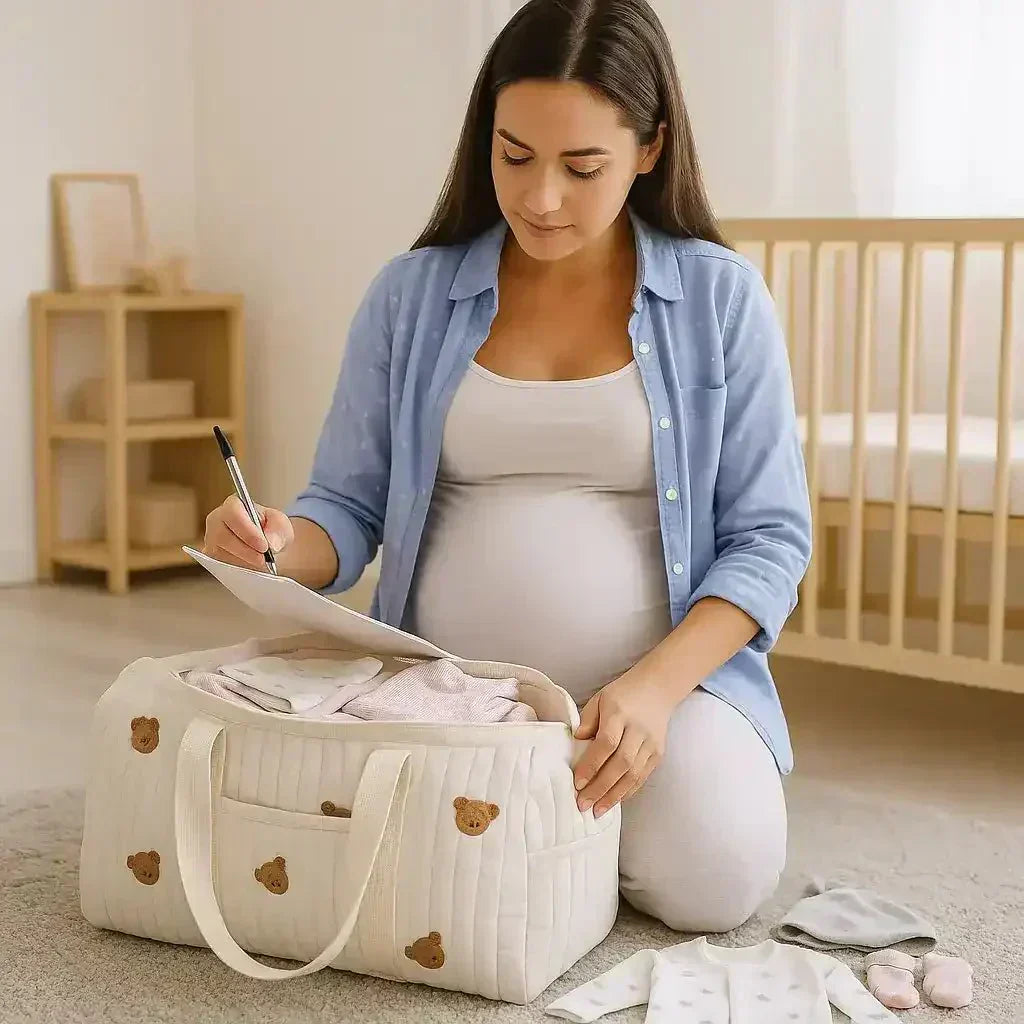
Pack once. Avoid overpacking. Don’t forget the essentials
Written by GoBabyMart Parents & Editorial Team
Last updated: January 2026
Packing your hospital bag can feel overwhelming — especially when every checklist online tells you something different. Some encourage overpacking. Others leave out essentials. Most don’t explain what you’ll actually use once you’re there.
In practice, most first-time parents overpack because they don’t yet know what hospitals actually provide or how limited space can be in a hospital room.
This guide is different.
It’s built around real hospital stays, not Pinterest aesthetics. You’ll learn what to pack, what the hospital already provides, and how to stay prepared without dragging your entire house into the delivery room.
When Should You Pack Your Hospital Bag?
Most parents should pack their hospital bag between 32 and 36 weeks of pregnancy.
If you’re scheduled for an induction or C-section, aim to pack at least two weeks earlier. Labor rarely follows a schedule, and having your bag ready early removes unnecessary stress.

The 3-Phase Hospital Bag System (One Master Checklist)
Print-friendly: This checklist is designed for easy reference. You can bookmark this page or print it to use while packing.
Most hospital bag checklists fail because they treat packing as one big task. In practice, hospital stays aren’t linear — what you need during labor is different from what you’ll want during recovery or discharge.
This guide uses a 3-Phase Hospital Bag System so you only reach for what you need, when you need it, without digging through clutter.
How to pack this correctly:
Pack each phase in its own pouch or compartment. Label them if possible.
Phase 1: Labor & Delivery (What You’ll Use First)
This pouch should stay on top or in an outer compartment.
During labor, access matters more than quantity. Parents often find that anything buried at the bottom of a bag simply doesn’t get used. These are the items you’ll want within reach immediately.
For Mom
-
Photo ID & insurance card
-
Birth plan (if you have one)
-
Phone + long charging cable
-
Lip balm (hospital air is extremely dry)
-
Hair ties or headband
-
Glasses or contacts (if applicable)
-
Comfortable socks or grip socks
For Partner
-
Photo ID
-
Phone + charger
-
Light snack (if allowed)
-
Breath mints or gum
-
A light layer (hospital rooms are cold)
For Baby (Minimal — Hospital-Focused)
-
Going-home outfit (newborn and 0–3 months, just in case)
-
Approved infant car seat (required for discharge)
Important: Most hospitals provide diapers, wipes, blankets, hats, and basic clothing for your baby during labor and recovery.
Phase 2: Postpartum Stay (Recovery & Comfort)
This pouch supports the hours or days after delivery, when rest, mobility, and comfort matter most.
Many parents are surprised by how physically draining the first 24 hours after delivery can feel. Comfort items that seemed optional beforehand often become essential once recovery begins.
For Mom
-
Loose, breathable pajamas or a nursing-friendly gown
-
Nursing bras or comfortable bras
-
High-waisted underwear (especially helpful after delivery)
-
Toiletries (toothbrush, face wash, moisturizer)
-
Flip-flops or shower shoes
-
Light robe or cardigan
-
Reusable water bottle
For Partner
-
Change of clothes
-
Toiletries
-
Sleep mask or earplugs
-
Refillable water bottle
-
Snacks (hospital food access can be limited)
For Baby
-
Optional swaddle (if you prefer your own)
-
Baby nail file or mittens
-
Pacifier (if planning to use one)
Phase 2b: C-Section Recovery Addendum (If Applicable)
If you are scheduled for—or may require—a C-section, recovery needs are different from a vaginal delivery. Mobility is limited, incision comfort matters, and hospital stays are often longer.
Add these items to your Phase 2 pouch:
-
High-waisted, incision-safe underwear
Helps avoid pressure or friction directly on the incision site. -
Abdominal binder or support band (if approved by your provider)
Can improve comfort when standing, walking, or coughing after surgery. -
Loose, soft clothing that does not rub the incision
Dresses or loose-fit pajamas are often more comfortable than waistbands. -
Slip-on shoes or sandals
Bending and tying shoes can be uncomfortable during early recovery. -
Long phone charging cable
Mobility is limited, and outlets are rarely positioned conveniently.
C-section recoveries prioritize incision protection, mobility support, and comfort over aesthetics. Packing with recovery in mind reduces unnecessary strain during your hospital stay.
Phase 3: Going Home & Logistics
This pouch is rarely needed until discharge day. Keep it packed but out of the way.
Parents recovering from a C-section often find that small comfort details—like avoiding pressure on the incision or minimizing unnecessary movement—matter far more than expected.
For Mom
-
Comfortable going-home outfit (loose waist, soft fabric)
-
Lightweight jacket or cardigan
For Baby
-
Final going-home outfit (weather-appropriate)
-
Optional blanket for the car seat (not under straps)
Important Documents & Extras
-
Folder or envelope for hospital paperwork
-
Extra tote or foldable bag (for items the hospital allows you to take home)
How Many Bags Should You Bring?
In practice, hospital rooms are small, storage is limited, and families may move rooms during their stay. Parents who overpack often end up leaving items untouched in the car.
For most families, two bags are ideal:
• One primary hospital bag organized with separate pouches for each phase
• One small extra tote or overnight bag for discharge items and partner essentials
Partners often underestimate how long labor and recovery can last. A separate overnight or weekender-style bag helps keep clothing, chargers, and personal items organized during longer stays.
Avoid overpacking. Hospital rooms are small, and you may move rooms during your stay.

5 Things You Should NOT Pack (Most Parents Overdo This)
Many parents later realize they packed items they never used—while overlooking what actually made their hospital stay more comfortable. Hospitals are functional spaces, and packing with that reality in mind helps avoid unnecessary clutter.
-
Diapers and wipes
Most hospitals provide these during your stay, and bringing extras often just takes up space. -
Bulky pillows or bedding
They’re difficult to manage in small rooms, get soiled easily, and rarely feel worth carrying home. -
Multiple baby outfits
Aside from a going-home outfit, most clothing stays unused during the hospital stay. -
Heavy electronics or décor
Outlets are limited, surfaces are shared, and these items tend to become more hassle than help. -
Fancy labor outfits
During labor and recovery, comfort, access, and flexibility matter far more than appearance.
Why This System Works
-
You only access what you need in the moment
-
Reduces stress during labor and recovery
-
Prevents overpacking and clutter
-
Mirrors how hospital stays actually unfold
If you only remember one thing: pack by phase, not by person.
What Does the Hospital Provide After Delivery?
Most U.S. hospitals provide:
- Diapers and wipes for baby
- Swaddling blankets
- Postpartum pads and mesh underwear
- Peri bottle
- Basic baby care items
Most U.S. hospitals provide diapers and wipes for baby, swaddling blankets, postpartum pads and mesh underwear, a peri bottle, and basic baby care items, and many hospitals cover these items as part of standard care (refer to the Cleveland Clinic’s hospital bag guidance). According to UnityPoint Health, policies vary by hospital — it’s always smart to confirm what’s included ahead of time.
What NOT to Pack in Your Hospital Bag
Avoid packing:
- Large amounts of baby clothes
- Expensive jewelry
- Full makeup kits
- Bulky pillows or blankets
- Multiple bags for short stays
Overpacking creates clutter and stress during recovery.
Scenario-Based Packing Guide (Quick Answers)
What to Pack for a C-Section Hospital Stay
Expect a longer stay (2–4 days). Add:
- High-waisted underwear
- Loose, front-opening clothing
- Extra toiletries
What to Pack If You’re Being Induced
Inductions can take time. Add:
- Extra snacks
- Entertainment (tablet, headphones)
- Additional partner clothing
What to Pack for a Longer Hospital Stay
If complications are expected:
- Extra pajamas and underwear
- Travel-size laundry detergent
- Additional baby outfit
Packing for NICU & Preterm Hospital Stays
For parents whose babies are expected to spend time in the NICU (neonatal intensive care unit) or for those at risk of preterm birth, packing looks a bit different. In these situations, you may spend more time in the hospital and need items that bring comfort and practicality during uncertain hours.
What to Pack if Your Baby May Go to the NICU
-
Extra layers for baby — preemies can get cold easily, so pack one or two lightweight layers in addition to a going-home outfit.
-
Soft blankets or swaddles — hospitals provide basic blankets, but you may prefer familiar ones that comfort both you and your baby.
-
Books or small activities — NICU stays can be slow; bring low-effort distractions for you and your partner.
-
Nursing/pumping support gear — if you’re planning to express milk, include breast pump accessories, storage bags, and a cooler bag.
-
Comfort items for partner and support person — extra socks, snacks, a refillable water bottle, and a charging pack help for long, unpredictable days.
Quick Tips for NICU Packing
-
Confirm NICU policies ahead of time — some units limit what can be stored at the bedside.
-
Keep a separate “NICU essentials” pouch within your bag so you can access it without digging through everything.
-
Label baby items clearly — it helps staff when multiple infants are cared for in the same area.
This section addresses a real parent concern that many standard hospital checklists overlook.
How Many Bags Should You Bring to the Hospital?
Most families do best with one medium-sized hospital bag and a small partner bag.
Parents often do best with one medium-sized hospital bag and a small partner bag. Many families prefer structured bags with separate compartments, like those in the GoBabyMart diaper bag collection, to keep essentials organized without overpacking.
Staying Organized Without Overpacking
Packing cubes or labeled pouches help separate labor essentials, postpartum items, and baby clothing. A structured bag with wide openings and internal compartments—such as the GoBabyMart Universal Diaper Bag Backpack—makes it easier to access items quickly without unpacking everything.
- Labor essentials
- Postpartum items
- Baby clothing
This keeps nurses and partners from digging through everything when you need something quickly.
FAQs: Hospital Bag Checklist
When should I pack my hospital bag?
Most parents should pack between 32 and 36 weeks. Earlier is better if you have a scheduled delivery.
What does the hospital give you after birth?
Hospitals typically provide diapers, wipes, postpartum pads, mesh underwear, and basic baby supplies.
Do I need a diaper bag at the hospital?
No. A standard overnight bag is sufficient. You can transition to your everyday diaper bag after discharge.
What should my partner pack for the hospital?
Partners should pack clothes, chargers, snacks, toiletries, and any medications they need.
How many outfits should I pack for my baby?
One or two outfits is enough. Hospitals provide clothing during your stay.
Final Thoughts
Your hospital bag doesn’t need to be perfect — it needs to be practical. Focus on comfort, essentials, and peace of mind. Hospitals are equipped to handle the rest.
Once you’re home, your hospital bag naturally transitions into daily outings. Our guide on what to keep in an everyday diaper bag walks through essentials parents actually use after discharge. If organization is your biggest concern, these diaper bag organization tips help you maintain a simple system without constantly repacking.
Editorial Responsibility & Sources
How This Checklist Was Created
This hospital bag checklist was developed using real-world parenting experience, current U.S. hospital discharge requirements, and publicly available guidance from trusted medical organizations.
The goal of this guide is to reflect how hospital stays typically unfold in practice and what parents commonly find useful during labor, recovery, and discharge. It incorporates feedback and packing patterns reported by parents across a range of delivery experiences, including vaginal births, inductions, and C-sections.
This content is not a substitute for medical advice. Hospital policies, recovery needs, and provider recommendations can vary. Always follow guidance from your healthcare provider and the specific hospital where you plan to deliver.
Authoritative References
Information in this article is informed by guidance from the following established organizations:
-
American Academy of Pediatrics (AAP) — newborn discharge requirements and car seat safety guidance via HealthyChildren.org
-
Cleveland Clinic — hospital bag preparation and postpartum recovery information
-
UnityPoint Health — hospital-provided postpartum and newborn supply guidelines
This article is reviewed periodically to ensure it remains accurate, practical, and relevant for modern hospital births.


