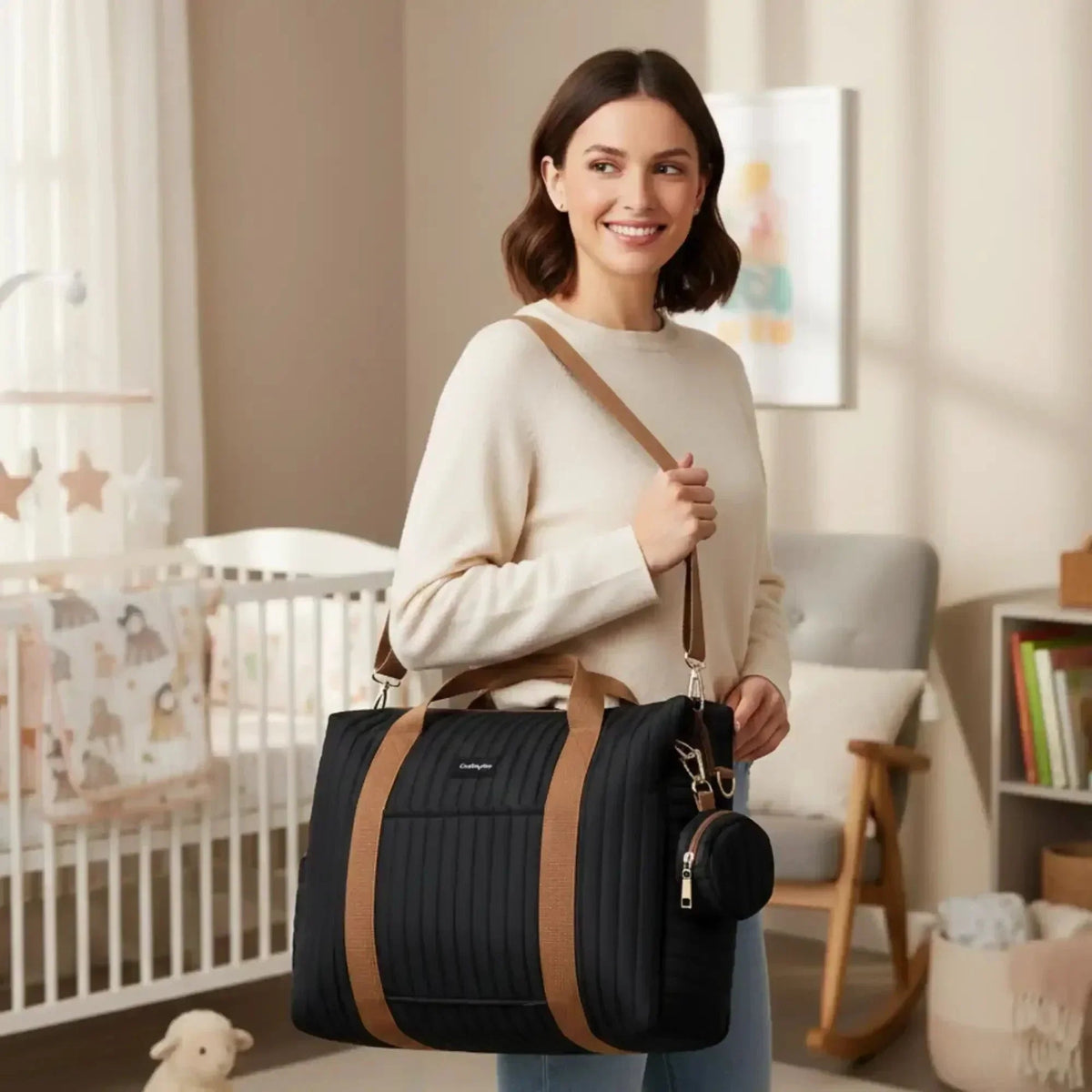
What parents really mean when they search for an “everyday diaper bag”
Written by GoBabyMart Parents & Editorial Team
Last updated: January 2026
When parents search for an everyday diaper bag, they’re not looking for the biggest bag or the one with the most pockets. They’re looking for something that works for real life — short errands, quick park trips, coffee runs, daycare drop-off, and the moments in between.
An everyday diaper bag should feel effortless. You should be able to grab it without thinking, know exactly where everything is, and carry it comfortably without feeling like you packed for a weekend trip. Most frustration with diaper bags comes from using bags designed for travel and forcing them into daily use.
This guide is built around real daily use — not travel days, not overpacked scenarios, and not “just in case” situations that slow parents down.

What “Everyday Use” Actually Looks Like in Real Life
Most diaper bag advice sounds good in theory — until you’re late for daycare, holding a baby in one arm, and trying to unzip the wrong pocket with the other.
To pressure-test what really works for everyday use, we evaluated this setup across real, repeat scenarios: quick grocery runs, daycare drop-offs, stroller walks, and short outings where efficiency matters more than carrying everything.
Here’s what we learned quickly:
-
A bag that works for 2–3 hour daily outings often fails during longer days — overpacking becomes the problem, not storage.
-
Bottom compartments turn into “black holes” within a week unless there’s a fixed layout.
-
If wipes aren’t accessible with one hand, the bag slows you down more than it helps.
- We found that once diapers, wipes, and a spare outfit are packed, any extra item immediately slows access — which is why layout matters more than overall size.
When a bag fails at everyday use, parents don’t just feel disorganized — they feel rushed, distracted, and frustrated during moments that should be simple.
The goal of an everyday diaper bag isn’t to prepare for every emergency. It’s to move fast, stay organized, and avoid digging during predictable daily moments. That’s why the rest of this guide focuses less on features and more on how an everyday diaper bag actually behaves once life gets moving.
What makes a diaper bag truly “everyday”
An everyday diaper bag is defined more by how it’s used than by how much it holds.
First, access matters more than capacity. On daily outings, parents need wipes or a clean diaper immediately, often with one hand. A bag that collapses or requires unpacking to reach essentials becomes frustrating quickly.
Second, comfort matters over time. Even a short walk can feel long if the bag pulls awkwardly or slips off your shoulder. Everyday bags should feel stable during movement, whether you are carrying a child, opening doors, or navigating stairs.
Finally, separation is critical. Daily messes happen—spills, wet clothes, used wipes. A bag that allows clean and dirty items to stay separate prevents stress and keeps the rest of the bag usable.
If you want to see the range of bag styles designed for everyday routines, you can explore the GoBabyMart diaper bag collection here.
The Everyday Diaper Bag Readiness Checklist (Print-Friendly Reference)
Print-friendly: This checklist is designed for quick, everyday use. You can save or print it to keep your diaper bag consistently stocked without repacking from scratch.
This checklist is designed for parents who want a reliable, everyday-ready diaper bag without rethinking their setup each time they leave the house. It focuses on readiness, quantity guidance, and real-life checks, not just item names.
Print or save this checklist and use it as a weekly reset tool or a quick scan before heading out.
1. Diapering Readiness
-
☐ Diaper quantity matches outing length
-
Short errands: enough for a couple of changes
-
Half-day outings: add a buffer for delays
-
-
☐ Wipes are accessible with one hand
(Not buried or sealed inside another pouch) -
☐ Changing surface is clean and usable
(Pad or liner is dry and folded correctly) -
☐ Disposal solution is available
(Bags are unused and easy to grab)
2. Clothing & Weather Backup
-
☐ Spare outfit fits current size
(Check monthly—babies outgrow backups quickly) -
☐ Seasonal layers are appropriate
(Light layer in summer, extra warmth in colder months) -
☐ Socks or foot coverings included if needed
(Often forgotten, frequently needed)
3. Feeding & Comfort Check
-
☐ Feeding items match today’s plan
(Bottle or snacks—avoid carrying both unnecessarily) -
☐ One backup option included
(Extra snack or feed for delays) -
☐ Comfort item accounted for (if used)
(Pacifier, small toy, or book—not loose items)
4. Cleanliness & Mess Control
-
☐ Wet or sealable bag is empty and ready
(Not already holding used items) -
☐ Hand hygiene option available
(Especially important when soap/water aren’t nearby) -
☐ No used items left from last outing
(Old wipes, wrappers, or clothing removed)
5. Safety & Organization Check
-
☐ Small or hazardous items are secured
(Nothing loose that a child could reach) -
☐ Personal items have a fixed location
(Keys, wallet, phone always return to the same pocket) -
☐ Bag layout is unchanged
(Essentials haven’t “drifted” into random compartments)
6. Final Everyday-Ready Test
Before leaving, do a quick check:
-
☐ Can you grab wipes in under 5 seconds?
-
☐ Can you find a clean diaper without unpacking the bag?
-
☐ Does the bag feel comfortable and balanced when worn?
-
☐ Is there space left for something unexpected?
If the answer is “yes” to all four, your diaper bag is everyday-ready.
Tip: Many parents print this checklist and keep it inside the bag, using it once a week to reset their setup and prevent clutter from building up.
When an Everyday Diaper Bag Isn’t the Right Fit
Everyday diaper bags are designed for short, frequent outings — errands, quick park visits, stroller walks, and daycare drop-offs where speed and predictable access matter most. However, there are real situations when even a well-organized everyday bag will frustrate you:
-
Long days or multi-purpose travel: If you’re out for 6+ hours carrying feeding gear, spare clothing for multiple kids, or bulky items, everyday bags can feel cramped and slow you down.
-
Multiple caregiving roles: Parents who alternate tasks — holding a baby, carrying groceries, or managing other kids — often need more capacity and faster access than a minimalist everyday layout allows.
-
Special gear needs: Daily requirements can include bulky items (pump parts, large snacks, toys for older toddlers). Everyday bags are not optimized for this volume.
In these cases, a larger day-trip bag, travel tote, or weekender style may keep essentials better organized and reduce stress from repeated packing and unpacking. Choosing the wrong bag for these scenarios often leads to overpacking, slower access, and unnecessary frustration during routine days.
What size diaper bag works best for everyday use?
For daily use, bigger is rarely better. The most functional everyday diaper bags are large enough to hold essentials plus one layer of backup, but small enough to discourage overpacking.
Parents tend to run into trouble when there is too much empty space. Extra space invites clutter, which makes it harder to find what you need quickly. A well-sized everyday bag naturally limits what you carry and helps maintain a consistent layout.
A helpful test is simple: if you cannot locate wipes in a few seconds without looking, the bag is either too large or poorly organized for everyday use.
The Everyday-Ready Decision Framework
If you want to evaluate whether a diaper bag will actually work day-to-day, focus on four practical questions.
Access: Can you reach wipes and a clean diaper immediately without unloading the bag?
Comfort: Does the bag feel balanced and comfortable after 30–90 minutes of carrying?
Clean-up: Is there a clear place for wet or dirty items so the rest of the bag stays clean?
Style fit: Does the bag align with how you normally dress and move through your day?
Bags that score well across these four areas tend to stay in rotation long after the newborn phase. For parents who prefer a structured, everyday carry that still looks like a normal bag, the GoBabyMart Multifunctional Diaper Bag Tote is one example of this balance.
What should be in an everyday diaper bag?
An everyday diaper bag should cover predictable needs plus one unexpected situation—not every possible scenario.
For most families, the everyday core stays consistent:
- Diapers and wipes
- A changing pad or liner
- One spare outfit
- Feeding essentials for that outing
- A way to contain messes (wet bag or sealed pouch)
- Your personal essentials
Keeping this core stable reduces decision fatigue. Instead of repacking from scratch, you simply restock items that were used.
A key safety note: small loose items should always be stored in secure, closed pockets and kept out of reach. The American Academy of Pediatrics emphasizes that small objects pose choking risks, particularly during rushed moments when bags are open and children are nearby.
Everyday packing by age (without overpacking)
Newborns (0–6 months)
Newborn outings involve frequent changes and feeding. For everyday use, parents typically need more diapers and an extra outfit, but not travel-level quantities. Quick access and hygiene are more important than volume.
Babies (6–12 months)
As babies grow, outings get longer but changes become less frequent. Many parents find that reducing spare clothing while adding snacks or feeding flexibility keeps the bag lighter and more manageable.
Toddlers (1–3 years)
Toddlers usually require fewer diapers but more “recovery” items. Extra bottoms, wipes, and a wet bag handle most daily mishaps without increasing bag size.
Backpack or tote for everyday use?
| Style | Best For Everyday Use | Where It Breaks Down | Not Ideal If You… |
|---|---|---|---|
| Diaper Backpack | Walking, daycare drop-offs, stroller walks, hands-free movement | Slightly slower access if overpacked | Prefer quick grab-and-go access |
| Diaper Tote | Quick errands, car-based routines, short outings | Shoulder strain during longer walks or multi-stop outings | Walk long distances or carry your child often |
| Minimal Crossbody | Ultra-short trips, toddler-only essentials | Limited capacity and organization | Need diapers, wipes, or outfit changes |
Use this comparison to narrow your options quickly — then focus on layout and access, which matter more than style for daily use.
There is no universal answer — the right everyday diaper bag style depends on how you move through your day and how long you carry the bag.
Backpacks tend to work better for parents who walk more, carry their child frequently, or rely on hands-free movement during daily routines. Totes often work well for quick errands and car-based routines where easy access matters most.
For a deeper, side-by-side breakdown of these tradeoffs, this comparison guide walks through both styles in detail.
Parents who want hands-free carry for daily movement often prefer a convertible backpack style, such as the GoBabyMart Convertible Diaper Backpack.

Can an everyday diaper bag replace a regular purse?
Yes—when it is organized intentionally.
The diaper bag replaces a purse when personal items have a consistent home and baby items are grouped separately. The most common reason this fails is constant rearranging. A stable layout allows the bag to function as both a diaper bag and an everyday carry.
Real-life scenarios that test an everyday diaper bag
The quick errand that turns into an hour
Delays happen. A missed nap, long checkout line, or hungry child can quickly change plans. One backup snack and one spare outfit bottom solve most of these situations without turning the bag into a travel kit.
Changing a diaper outside the house
When you’re away from a full changing station, preparation matters. The CDC emphasizes a simple sequence—prepare, change, contain waste, clean hands—to reduce germ spread. Having wipes, a liner, and disposal bags immediately accessible makes this process calmer and more hygienic.
The spill or accident moment
Everyday bags work best when messes are isolated quickly. A dedicated wet or sealed pouch prevents one incident from contaminating the rest of the bag.
Keeping an everyday diaper bag organized long-term
The simplest system is the one you can maintain consistently. Most parents succeed by keeping an “always-packed” base—diapers, wipes, spare clothes, clean-up supplies—and adding only what is needed for that specific outing.
A short weekly reset to restock and remove stray items keeps the bag functional without daily repacking. If you want a deeper organization system focused specifically on layout and zones, this guide expands on that approach.
FAQs
What is the best diaper bag for everyday use?
The best everyday diaper bag allows quick, one-handed access to essentials, stays comfortable during short outings, and keeps clean and dirty items separated without encouraging overpacking. For daily use, layout and access matter more than total capacity.
How many diapers should I pack for a 2-hour outing?
For a 2-hour outing, most parents pack 2–3 diapers for toddlers and 3–4 diapers for babies, along with wipes. Newborns may require one extra diaper due to more frequent changes.
Is a backpack diaper bag better than a tote for everyday use?
A backpack diaper bag is often better for parents who walk frequently, carry their child, or need hands-free movement. Tote diaper bags work well for quick errands and car-based routines where the bag is carried for shorter periods.
What size diaper bag works best for everyday use?
For everyday use, a medium-size diaper bag that holds diapers, wipes, a spare outfit, feeding essentials, and personal items without stacking is ideal. Oversized bags often lead to clutter and slower access during routine outings.
Can a diaper bag replace a purse for daily use?
Yes, an everyday diaper bag can replace a purse when personal items have a consistent location and baby items are grouped separately. A stable layout prevents constant re-organizing and makes daily use more practical.
What should I pack in a diaper bag for daycare drop-off?
For daycare drop-off, pack diapers, wipes, a change of clothes, feeding essentials if needed, and your personal items. Avoid packing extras that won’t be used during the day to keep the bag light and easy to manage.
Do I need insulated pockets for an everyday diaper bag?
Insulated pockets are helpful if you regularly carry bottles or snacks, but they are not essential for short outings. For everyday use, quick access and organization are more important than specialty features.
How do I keep my diaper bag from getting cluttered?
To prevent clutter, maintain a consistent base setup and do a quick weekly reset. Remove unused items, restock essentials, and return everything to the same place so access stays fast during daily routines.
Editorial Responsibility & Sources
This guide is written by parents and product specialists focused on real daily routines—errands, stroller walks, daycare drop-offs, and short outings. We prioritize practical, repeatable advice over trends or promotional claims and align guidance with current hygiene and child-safety standards.
Authority sources referenced:
- CDC — Diaper-changing hygiene outside the home
- American Academy of Pediatrics — Choking prevention guidance


