
Newborn Essentials (0–3 Months): The 27 Items You Actually Need (Plus What to Skip)
What You Actually Need in the First 3 Months
Written by GoBabyMart Team
Last updated: December 2025
The first three months are intense in a very specific way: your baby’s needs are simple, but they happen on repeat—day and night. That’s why a newborn “must-haves” list shouldn’t look like a giant registry shopping spree. It should be a short, realistic set of essentials that supports the three things you’ll do constantly: feed, diaper, and help your baby sleep safely.
This guide focuses on what most parents genuinely use during the newborn phase (0–3 months), what you can wait on, and how to avoid overbuying while still feeling prepared—especially if this is your first baby or you’re working with limited space, including choosing the right diaper bag.

Newborn essentials (0–3 months): the short version
If you want the most simplified breakdown, start here:
-
Safe sleep setup (a firm, flat sleep surface + fitted sheets).
-
Feeding basics (breast, formula, or both—plus a few supporting items).
-
Diapering station (diapers, wipes, barrier cream, changing surface).
-
Clothing you can rotate daily (zip sleepers + a few basics).
-
Soothing tools (swaddle/sleep sack, pacifier if you choose, white noise).
-
Out-and-about essentials (car seat + an organized bag you can grab fast).
Safe sleep guidance varies by family and medical context, so use your pediatrician as your anchor—and if you want a clear baseline, the AAP safe sleep resources are a helpful reference point. AAP
Printable checklist: Use your browser’s Print option (Ctrl/Cmd + P) to print or save as PDF.
| Category | Item | Minimum Quantity | Buy Before Birth? |
|---|---|---|---|
| Sleep Setup | Safe sleep space (bassinet or crib) | 1 | Yes |
| Sleep Setup | Fitted sheets | 2–3 | Yes |
| Diapering Setup | Diapers (newborn) | 1 small pack | Yes |
| Diapering Setup | Diapers (size 1) | 1 small pack | Yes |
| Diapering Setup | Wipes | 1–2 packs | Yes |
| Feeding Setup | Feeding method basics (breast, formula, or combo) | As needed | Yes |
| Feeding Setup | Burp cloths | 6–8 | Yes |
| Clothing Basics | Zip sleepers | 5–7 | Yes |
| Clothing Basics | Extra layers (season-appropriate) | 2–3 | Yes |
| Bath & Care | Baby soap/shampoo | 1 | Yes |
| Bath & Care | Hooded towel or soft towel | 1–2 | Yes |
| Health & Safety | Digital thermometer | 1 | Yes |
| On-the-Go Setup | Diaper bag | 1 | Yes |
| On-the-Go Setup | Changing mat (portable) | 1 | Yes |
| Paperwork | Insurance card / pediatrician info | 1 set | Yes |
| Home Readiness | Laundry detergent (baby-safe) | 1 | Yes |
Newborn essentials by real-life scenarios (0–3 months)
Not every family uses newborn essentials the same way. How much you actually need depends on your daily routine, laundry frequency, and how often you leave the house. These common scenarios can help you adjust your essentials without overbuying.
If you do laundry every 2–3 days
-
Fewer sleepers and basics are needed
-
One feeding setup at a time is usually enough
-
A smaller diaper and wipe stash works well
This setup works best for families who prefer a minimalist approach and frequent resets.
If you prefer fewer laundry loads
-
Extra zip sleepers become more important than extra outfits
-
Additional burp cloths help reduce midweek laundry
-
A slightly larger diaper supply prevents running out unexpectedly
This is a good option for parents adjusting to newborn routines or limited laundry access.
If you’re mostly at home
-
You can keep feeding and changing setups simple
-
One main sleep space is usually sufficient
-
Outings gear can stay minimal at first
Many parents find they add items gradually as they gain confidence.
If you’re out of the house regularly
-
A consistent diaper bag setup becomes essential
-
Extra clothing and feeding backups are more useful
-
Organization matters more than quantity
This applies to families with appointments, older siblings, or frequent short outings.
Sleep essentials (the “non-negotiables”)
Newborn sleep is unpredictable, but the setup should be simple and repeatable.
What you need
-
Crib, bassinet, or play yard with a firm, flat mattress.
-
2–4 fitted sheets (because leaks and spit-up are guaranteed).
-
Swaddle or sleep sack (pick what works for your baby; have 2–3 in rotation).
What to skip (for now)
-
Extra blankets, pillows, positioners, and “cute” sleep add-ons. They often become clutter at best—and can raise safety concerns depending on use and environment.
Do newborns need blankets to sleep?
Most families do best with wearable sleep options (swaddles/sleep sacks) instead of loose blankets, because they’re simpler to manage and reduce the chance of fabric shifting during sleep. Always follow your pediatrician’s guidance and current safety recommendations. AAP
Diapering essentials (what you’ll restock the most)
What you need
-
Diapers (newborn and size 1): babies outgrow newborn sizes quickly; having both saves a late-night run.
-
Sensitive wipes (fragrance-free if baby’s skin is reactive).
-
Diaper cream/barrier ointment (especially useful for early irritation).
-
Changing surface: a pad, portable mat, or any wipeable setup.
-
Diaper pail or odor-proof trash plan (optional, but sanity-saving).
How many diapers does a newborn use per day?
It’s common for newborns to go through many diapers daily in the early weeks, which is why a small “backup stash” matters more than stocking five months of supply. (Your pediatrician can also tell you what’s normal for your baby’s age and feeding type.)
Feeding essentials (breastfeeding, formula, or combo)
This is where many lists go off the rails. You don’t need every gadget—you need the basics that match how you feed.
If you’re breastfeeding (or pumping sometimes)
-
Nursing bras/pads (a couple you actually like wearing).
-
Nipple cream (if needed).
-
Burp cloths (you’ll use more than you think).
-
Milk storage bags or containers (only if you pump).
-
If you want a reliable reference for storage timelines, the CDC breast milk storage guide is a solid one to bookmark. CDC
If you’re formula feeding (or supplementing)
-
Bottles (start with a small set; babies can have strong preferences).
-
Formula (enough for a week or two, not a full warehouse).
-
Bottle brush + drying rack (helps keep the routine smooth).
How many bottles do I need for a newborn?
Enough to get through a full day without constant washing is the goal—but it depends on how you feed, whether you pump, and how often you want to run the sink/dishwasher. Many parents start small, see what baby likes, then add more.
Clothing essentials (what actually gets worn)
Newborns don’t need outfits. They need easy changes.
What you need (realistic rotation)
-
7–10 zip sleepers (zippers tend to be faster at 2 a.m.).
-
5–7 onesies/bodysuits (useful under sleepers or on warmer days).
-
2–3 hats (season-dependent).
-
A few socks (optional; many babies kick them off).
Laundry reality check
If you do laundry frequently, you can own less. If you hate laundry, own more sleepers.
Bathing + health basics (keep it minimal)
What you need
You don’t need a fully stocked medicine cabinet for a newborn, but a few basics make daily care easier and reduce unnecessary stress.
-
Gentle baby wash (fragrance-free is often easiest on newborn skin)
-
Soft hooded towels (2 is enough)
-
Baby nail file or clippers (newborn nails grow fast and can be sharp)
-
Digital thermometer (useful for quick checks and peace of mind)
-
Saline drops or spray (commonly used for dry or stuffy noses)
-
Bulb syringe or nasal aspirator (for gentle mucus removal when needed)
Stick to simple, widely recommended items and avoid buying medications unless advised by your pediatrician.
How do I care for the umbilical cord stump?
Your hospital and pediatrician should give you specific instructions for your baby. In general, most guidance emphasizes keeping the area clean and dry, folding the diaper down to avoid friction, and watching for signs of irritation or infection. According to guidance from HealthyChildren.org, the stump typically falls off on its own within the first few weeks.
When should I call the pediatrician?
Call your pediatrician if you notice:
-
Redness spreading around the stump
-
Swelling, discharge, or a foul odor
-
A fever or signs that your baby seems unusually unwell
When in doubt, it’s always okay to call — that’s what pediatric offices expect from new parents.
Soothing essentials (the “make life easier” category)
Soothing tools don’t guarantee sleep—but they can reduce chaos, especially during fussy periods when your baby needs extra comfort.
What helps most parents
-
Swaddles or sleep sacks (mentioned earlier because they’re that useful)
-
Pacifiers (if you choose to use them; having 2–4 on hand is usually enough)
-
White noise (machines or apps; optional but widely used to mimic womb sounds)
-
Baby carrier (optional early on, but many parents find it invaluable for hands-free calming)
You don’t need all of these. One or two that work for your baby is enough.
If swaddles or pacifiers don’t work
Not every baby likes the same soothing methods. If your newborn resists swaddling or pacifiers, other options may help:
-
Movement (gentle rocking, walking while holding baby, or carrier wear)
-
Sound (white noise, soft shushing, or low, steady background noise)
-
Contact (skin-to-skin or being held upright against your chest)
It’s normal to test a few approaches before finding what works.
Carrier vs. swing vs. bounce (how to choose)
-
Carrier: Best for hands-free calming and everyday tasks; popular with babies who want close contact
-
Swing or bouncer: Helpful for short periods, but not necessary for most families and not a sleep substitute
-
Arms + movement: Still the most effective soothing tool in the early weeks
If you’re trying to keep things minimal, a carrier alone often covers the biggest need.
What if my newborn only wants to be held?
You’re not doing anything wrong—this is very common in the first weeks. Newborns are adjusting to life outside the womb and often seek constant contact. A safe sleep setup plus a hands-free option (like a carrier) can help you meet your baby’s needs while still being able to function.
This phase usually eases with time.
Out-and-about essentials (what to keep ready by the door)
The true must-have
-
Car seat (installed correctly before baby arrives if possible).
The “don’t leave home without it” kit
Newborn outings are short, but they still require a mini system:
-
4–6 diapers
-
travel wipes
-
1–2 spare outfits
-
burp cloth
-
bottles/formula or pumped milk (as needed)
-
small changing mat
-
a zip pouch for soiled clothes
When choosing a diaper bag for the newborn stage, focus on function over size. Look for easy-access compartments, an insulated pocket for bottles, a wipeable interior, and a structured base so the bag doesn’t collapse when set down.
This is where an organized bag matters. If you want a structured, quick-access option for daily newborn outings, the GoBabyMart Multifunctional Diaper Bag Tote is built for grab-and-go packing (including an insulated pocket and dedicated compartments). GoBabyMart
And if your “out-and-about” also includes longer days (or you’re carrying extra layers, pump parts, or backup everything), the GoBabyMart Large Weekender Duffle Bag gives you more space without forcing you into a bulky luggage situation. GoBabyMart

What you can wait on (and buy later if you actually need it)
A lot of “newborn must-haves” are really “nice-to-haves eventually.” Consider waiting on:
-
Shoes (newborns don’t need them)
-
Excessive newborn outfits
-
Large toy collections
-
A high chair (not needed in the newborn stage)
-
Complex feeding gadgets you aren’t sure you’ll use
A good rule: if it doesn’t support feeding, diapering, safe sleep, or leaving the house smoothly, it’s probably not urgent.
Two GoBabyMart reads that pair well with this newborn checklist
If you’re building a simple system (instead of buying random items), these two guides will help you round out the plan without duplicating what you’ve read here:
FAQ: Newborn essentials (0–3 months)
What are the absolute newborn essentials for the first week?
The absolute newborn essentials for the first week are a safe sleep space, diapers and wipes, a basic feeding setup (breast, formula, or both), a few zip sleepers, and burp cloths. These items cover feeding, sleep, and diapering, which make up nearly all daily needs in the first days at home. Most other products can wait until you see what your baby actually uses.
How many newborn clothes do I really need for 0–3 months?
Most parents only need enough newborn clothes to last 2–4 days between laundry cycles. This usually means 5–7 zip sleepers and a few basic layers. Babies often live in sleepers during the newborn stage, especially in the first month. If your baby spits up frequently, having a few extra sleepers can reduce laundry stress.
Do I need both newborn and size 1 diapers?
Yes, it’s usually smart to have both newborn and size 1 diapers on hand. Many babies outgrow newborn diapers within the first few weeks, sometimes sooner. Having size 1 ready helps avoid last-minute store runs during an already exhausting period. Starting with small packs instead of bulk boxes gives you flexibility.
What should I keep in my diaper bag for a newborn?
A newborn diaper bag should include diapers, wipes, a changing mat, an extra outfit, burp cloths, and feeding supplies if needed. A separate space for messes or wet items is also helpful. Keeping the bag organized makes quick changes easier when you’re out of the house. You don’t need to overpack for short trips.
What newborn items are commonly purchased but rarely used?
Commonly unused newborn items include excessive outfits, baby shoes, and bulky gear bought “just in case.” Products that don’t support daily needs like feeding, diapering, safe sleep, or quick outings are often used far less than expected. Many parents find it easier to buy these items later if a real need comes up.
Editorial Responsibility & Sources
This article is written and reviewed by the GoBabyMart team for general educational purposes and references publicly available guidance from trusted public health organizations. For medical or health-specific questions, parents should always follow their pediatrician’s advice.
Sources: American Academy of Pediatrics (AAP), Centers for Disease Control and Prevention (CDC), HealthyChildren.org
A quick safety note for parents
Every baby is different, and care recommendations can vary based on health history, feeding method, and your pediatrician’s guidance. This checklist is meant to serve as a practical baseline, not a rigid rulebook. Always follow your pediatrician’s advice—especially when it comes to sleep safety, feeding decisions, and newborn health concerns.
Read more

Baby Shower Gifts New Parents Actually Use (And What Gets Returned Fast)
Not all baby shower gifts make life easier. This guide highlights practical, parent-approved baby shower gifts new parents actually use—from everyday essentials to thoughtful group gifts that suppo...
Read more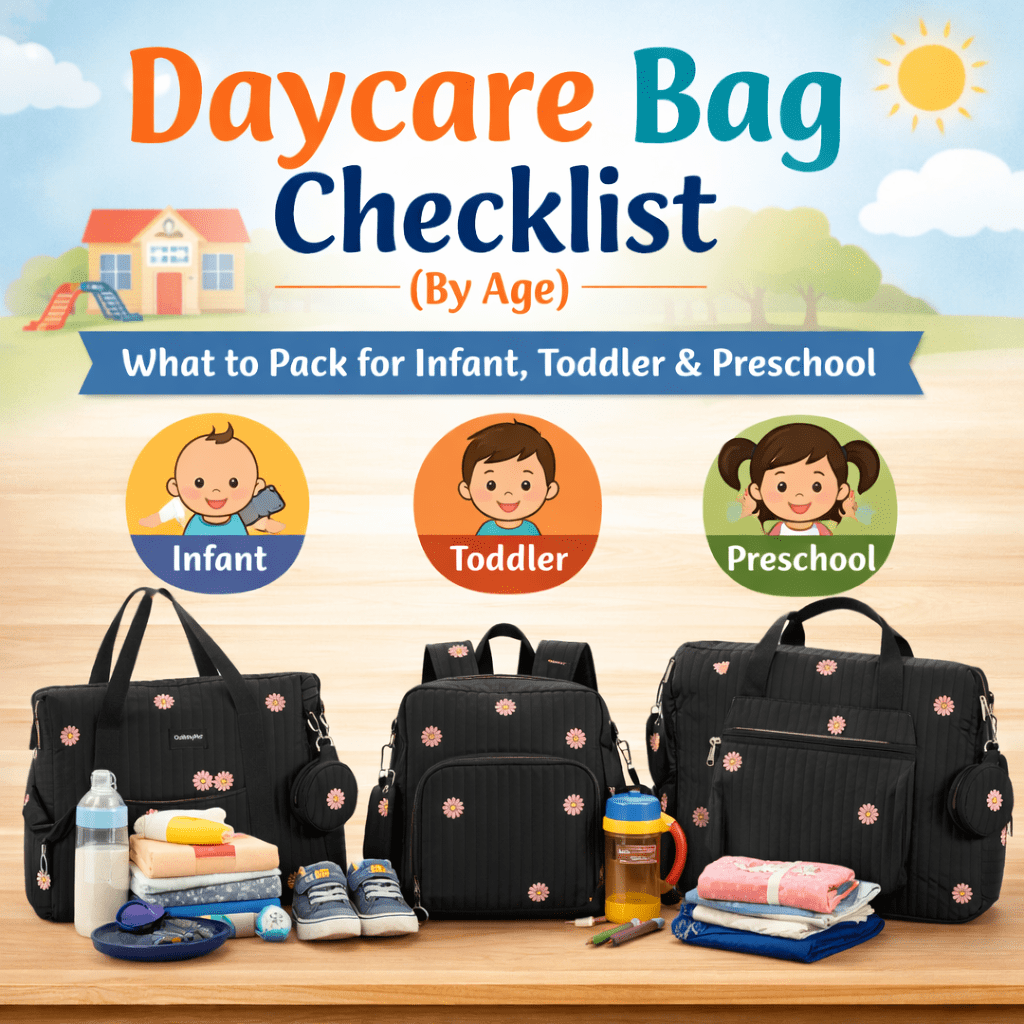
Daycare Bag Checklist by Age (Infant–Preschool)
Packing a daycare bag doesn’t have to be overwhelming. This age-by-age daycare bag checklist breaks down exactly what to pack for infants, toddlers, and preschoolers—so your child is comfortable, p...
Read more